
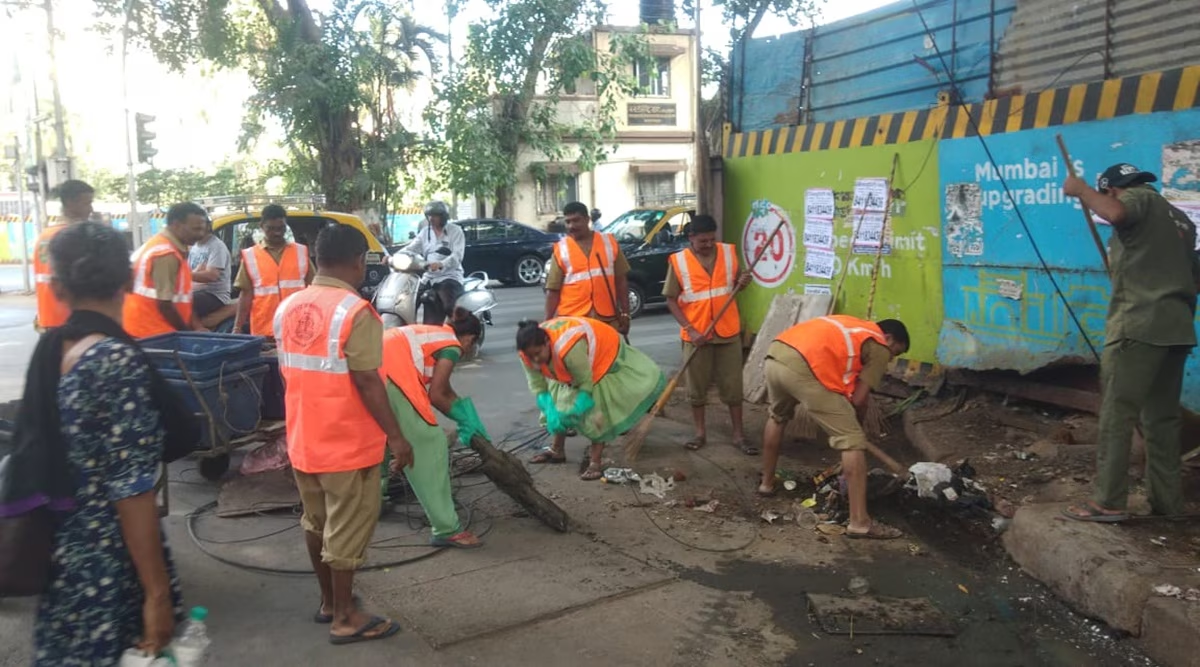
Citizens’ Cooperation Key to Making Mumbai Clean and Beautiful, Says BMC
Dr. Ashwini Joshi urges citywide participation for strong performance in Swachh Survekshan 2025–26
As the Government of India has announced the Swachh Survekshan 2025–26, the Brihanmumbai Municipal Corporation (BMC) has called upon citizens to actively cooperate in keeping Mumbai clean, hygienic and beautiful, with the aim of achieving a strong national ranking.
Making the appeal on behalf of the civic administration, Dr. Ashwini Joshi, Additional Municipal Commissioner (City), said that citizens’ participation and behavioural change would be decisive factors in Mumbai’s performance in this year’s cleanliness survey. She also directed various municipal departments to work in close coordination and implement effective, measurable initiatives for the survey.
A review meeting in this regard was held at the BMC headquarters on February 2, 2026, attended by Deputy Commissioner (Solid Waste Management) Kiran Dighavkar and senior officers from multiple civic departments.
The Swachh Survekshan, conducted annually by the Ministry of Housing and Urban Affairs, evaluates cities on parameters such as cleanliness, solid waste management, citizen engagement, waste segregation, collection, transportation and processing. The 2025–26 edition marks the tenth year of the national cleanliness ranking exercise.
For this year’s survey, the Centre has introduced the central theme “Swachhta Ki Nai Pehal – Badhaaye Haath, Kare Safai Saath”, placing greater emphasis on citizen feedback and verification. Digital feedback will be collected throughout the year via official websites and mobile applications. New benchmarks have also been introduced to curb open defecation and urination, while Behaviour Change Programmes in schools have been prioritised.
Special evaluation criteria have been framed for coastal cities, along with focused assessment of tourist, heritage, religious and high-footfall public places.
Addressing officials, Dr. Joshi said the Solid Waste Management Department has been making sustained efforts to scientifically manage waste across Mumbai city and suburbs. However, she stressed that accurate, comprehensive and up-to-date data collection is essential for these efforts to reflect positively in the national assessment.
She instructed departments including Solid Waste Management, Sewerage Operations and Projects, Mumbai Sewage Disposal Project, Storm Water Drains, and the Education Department to adopt a coordinated approach. Special emphasis, she said, should be placed on citizen participation and school-based initiatives, ensuring that residents and students become active stakeholders in the cleanliness mission.
“Instilling cleanliness habits at a young age leads to long-term and sustainable behavioural change at the societal level,” Dr. Joshi noted, adding that this directly strengthens urban sanitation outcomes.
Appealing directly to Mumbaikars, Dr. Joshi said citizens’ active involvement is critical to maintaining cleanliness. She urged residents to keep their homes, neighbourhoods and public spaces clean, promote on-site waste processing in housing complexes, and participate in cleanliness drives initiated by the civic administration. Citizens were also encouraged to discourage littering and unhygienic practices in public spaces.
The BMC reiterated that collective responsibility and public participation will be central to making Mumbai a cleaner, healthier and more liveable city, while improving its standing in Swachh Survekshan 2025–26.