
Spitting to Cost ₹250, Littering ₹500: BMC Unveils Stringent Solid Waste Bylaws 2025 for Mumbai
New civic rules mandate waste segregation, impose steep fines on violations to strengthen cleanliness and environmental compliance
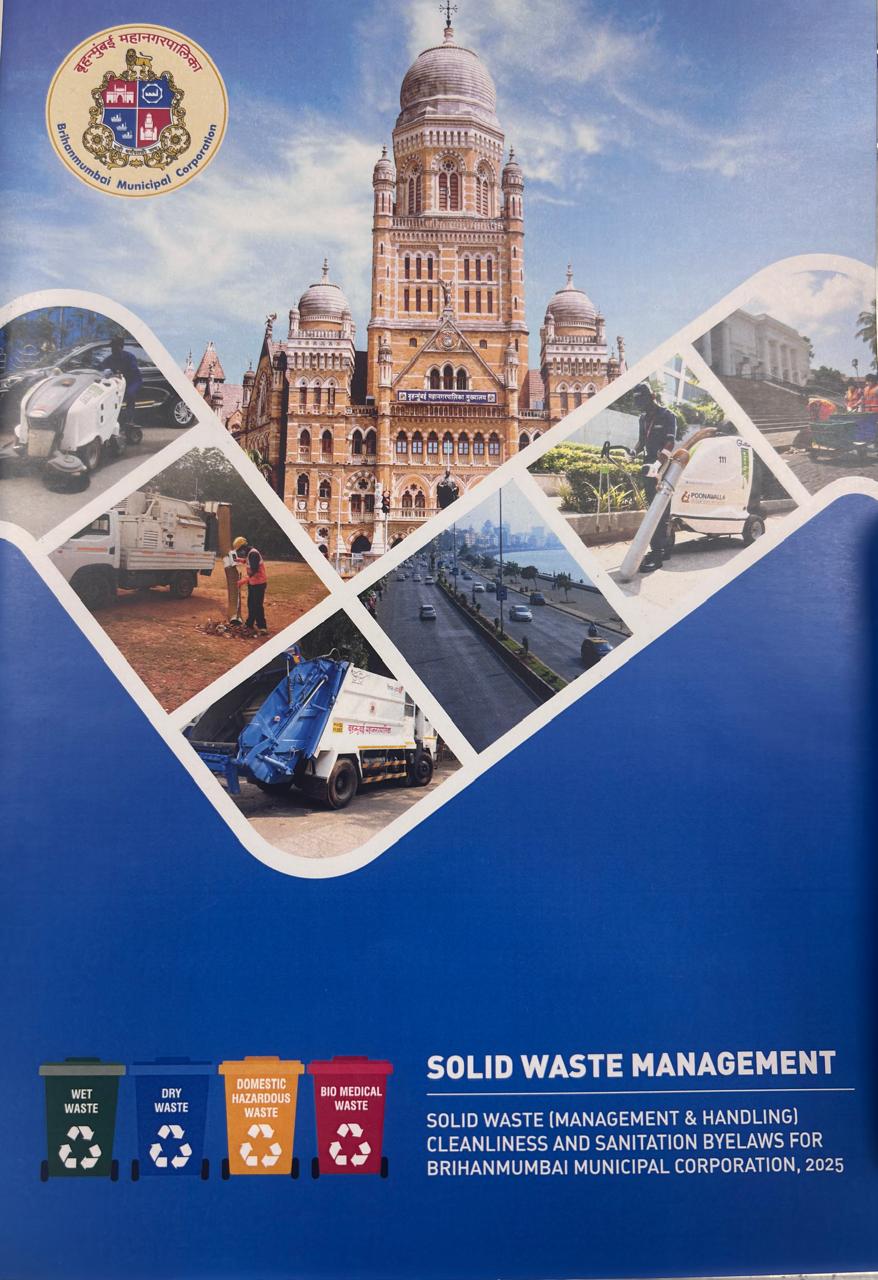
In a major step to tighten civic discipline and improve urban cleanliness, the Brihanmumbai Municipal Corporation (BMC) has issued the Solid Waste (Management and Handling), Cleanliness and Sanitation Bylaws – 2025, introducing clear rules and monetary penalties for violations across Mumbai city and suburbs.
Under the newly notified bylaws, spitting in public places will attract a fine of ₹250, littering ₹500, failure to segregate wet and dry waste ₹200, and unauthorised transportation of construction and demolition debris without a permit will invite a steep penalty of ₹25,000 per vehicle. Civic officials said the objective is to ensure strict compliance with waste segregation, handling, and disposal norms across all sections of society.
The bylaws have been issued under the directions of Municipal Commissioner and Administrator Bhushan Gagrani, with guidance from Additional Municipal Commissioner (City) Dr. Ashwini Joshi, and supervision by Deputy Commissioner (Solid Waste Management) Kiran Dighavkar. The BMC stated that regular enforcement drives and special cleanliness campaigns are already being carried out, and the new rules provide a stronger legal framework for action.
Explaining the rationale, Dr. Ashwini Joshi said the BMC has been making continuous efforts to ensure scientific and effective management of solid waste generated or brought into Mumbai. The bylaws have been framed in line with the Solid Waste Management Rules, 2016 issued by the Ministry of Environment, Forest and Climate Change, with the aim of regulating segregation, storage, collection, transportation, and processing of wet and dry waste in the city.
The new rules apply to all waste generators—individuals and establishments alike—and cover public and private spaces, including residential, commercial, industrial, government, semi-government, educational, religious, recreational, and social premises. Key provisions include a ban on littering and public nuisances, mandatory “clean premises” responsibility, compulsory segregation of waste at source, defined roles and duties of waste generators, service providers, contractors, and municipal authorities, and detailed regulations for Material Recovery Facilities (MRFs).
The bylaws also comprehensively address biomedical waste, e-waste, plastic waste, garden waste, animal waste, and construction and demolition debris. Citizens and establishments have been urged to actively participate in keeping Mumbai clean by maintaining hygiene in homes, neighbourhoods, and public spaces, and by strictly adhering to all prescribed rules.
Notably, the BMC has specified 21 distinct offences with corresponding penalties. These include fines for urinating or defecating in public places, feeding animals or birds in open public areas, washing vehicles or utensils in public, burning waste for commercial purposes, non-compliance by vendors and hawkers, failure to clean premises or drains, pet-related nuisance, and failure to clean venues within four hours after public events, among others.